
Now in its twelfth year, Class 46 is dedicated to European trade mark law and practice. This weblog is written by a team of enthusiasts who want to spread the word and share their thoughts with others.
Click here subscribe for free.
Who we all are...
Workshop on copyright clearance at MARQUES Spring Meeting
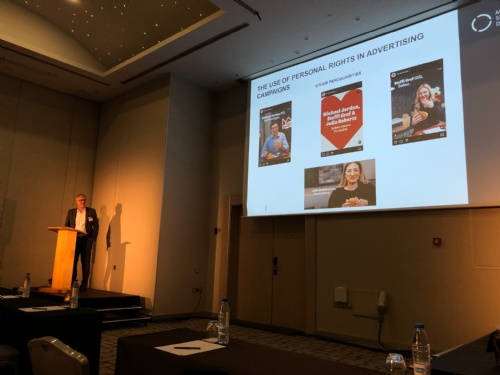 Members of the MARQUES Copyright Team presented a workshop on rights clearance for advertising campaigns from a copyright perspective during the Spring Meeting at the Hilton Barcelona today.
The workshop covered topics including personal rights, music and fictional works/characters. The speakers emphasised the need or a nuanced approach to copyright searching, due to the lack of harmonisation, the difficulty of determining inspiration and the often emotive nature of cases.
Thomas Hertl of Arnecke Sibeth Dabelstein in Germany discussed the use of personal rights in advertisements, and said the fundamental principle is the consent of the person whose name or image is being used. But look-alikes and sound-alikes pose more difficult questions.
Thomas showed examples of humorous ad campaigns by Burger King and SIXT which had used the names and images, respectively, of famous people without consent in Germany. In the latter case, a court had found that the use of an image of a union leader in an advert was permitted on the basis of freedom of expression.
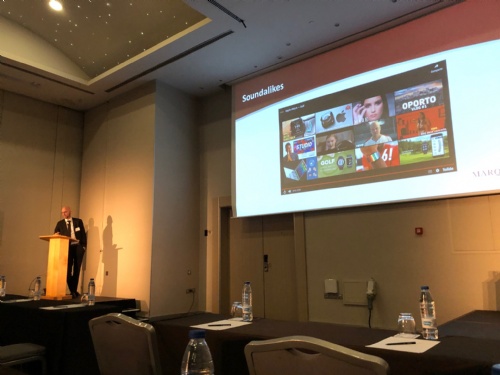 Thomas Hvammen Nicholson of Protector IP AS, Vice-Chair of the Team, provided several examples of disputes over the use of music in adverts – most of which had been settled. These included cases brought by Sony Music against Gymstack and by the Beatles over a Nike Air advert. He said that traditionally advertisers take so-called “sync licences” to songs but there is a growing trend for “box music”, which is licensed for a fixed fee.
Copyright clearance for music needs to address issues including term, territory, media and duration. It is vital to ensure all the copyright holders are contacted. Online and social media use should be addressed in the licence agreement, and in some cases the rights holder may insist on approval of the final advert. Some musicians, such as Tom Waits, object to any use of their music in advertising.
With any music licensing, there is a risk of a copyright action if the music sounds similar to another work. In New Zealand, for example, the National Party and its ad agencies were ordered to pay $225,000 for infringing Eminem’s track “Lose Yourself” in a political advert.
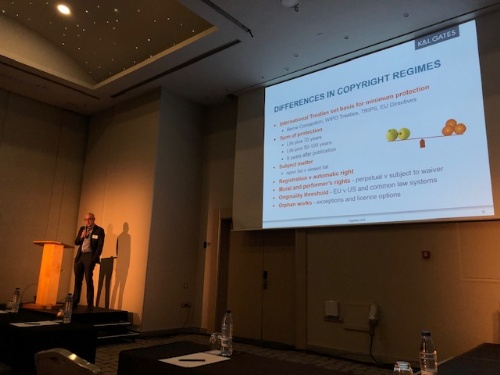 When it comes to clearing fictional works and characters, said Simon Casinader of K&L Gates in the UK, it is important to “think beyond a trade mark”. Characters, names and titles may all need to be cleared and the dates of copyright protection may vary. Characters including Rudolph the Red-Nosed Reindeer, the tooth fairy and Sherlock Holmes have all been the subjects of disputes.
In addition to the risk of litigation, there is a high risk of damage to reputation and brand, said Simon. When clearing a work, it is therefore important to consider factors including the media on which the work will be used, the fame of the earlier work, whether it was a one-off work or a series and use by third parties.
The workshop took place during the MARQUES Spring Team Meeting, which is being held today and tomorrow and is MARQUES’ first fully in-person event for over two years. It provides an opportunity for Teams to meet and report on their current and planned activities.
Posted by: Blog Administrator @ 16.18Tags: Spring Meeting, advertising, Eminem, Sony Music,


 Sharing on Social Media? Use the link below...
Perm-A-Link: https://www.marques.org/blogs/class46?XID=BHA5073


