
CLASS 99
The blog for design law, in Europe and worldwide. This weblog is written by a team of design experts and fans. To contribute, or join us, or for any other reason, email class99@marques.org.
Want to receive Class 99 by email?
Click here subscribe for free.
Click here subscribe for free.
Who we all are...
THURSDAY, 13 OCTOBER 2011
What's the point of designs - point of sale or point of use?
According to the excellent case comment by Krystian Maciaszek, ("Poland: Are the Designs Within an Ice-Cream to be Registered as an Industrial Design?" Maciaszek, Krystian, European Intellectual Property Review (2010), volume 32 , issue 12 , p. 656-659, Table of Contents and abstract here, complete text available PPV on Westlaw), the Polish Supreme Court have revisited a sticky problem familiar to US and UK practitioners: what to do about a design which is only visible part of the time? The case, Przedsiebiorstwo Produkcji Lodow "Koral" JK General Partnership v Patent Office (unrep. March 20, 2007), concerned the internal layers of ice cream, which were in contrasting colours that only became visible when the ice cream was being eaten. I don't have a picture of the ice cream, alas.
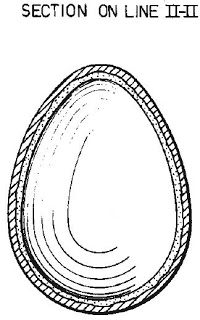 That makes it sound very much like the chocolate egg considered by the UK Registered Designs Appeal Tribunal in Ferrero's Design Application [1978] RPC 473 on appeal from a similar rejection.
The UK Tribunal noted that it had long been the practice to allow registration for designs of internal features. An example was that of a jack-in-the-box - the toy is normally concealed inside a very boring cubic box which would lack novelty.
The particular problem seen in Ferrero's case was that the exterior of the egg was conventional and the new part of the design (the contrasting interior colours) could only be seen after its destruction by breaking the article to which it was applied open to eat it. This seems also to have been the issue taken by the Polish Office. However, the UK Tribunal found no difficulty in allowing the design, on the basis that the internal features formed one of the attractions of buying the egg (presumably, for repeat customers).
The Ferrero decision led to the allowance in K K Suwa Suwosha's Design Application [1982] RPC 166 of a digital watch with hard-wired icons that were not visible until the watch was powered up and, ultimately, to the practice on icons set out in the Apple case [2002] FSR 38.
The current EU law (unlike the older UK law) specifies a test person in the ambiguous shape of the "informed user". One might well therefore suppose that use, rather than sale, is the point at which a design is to be judged. As against this, it is normally the sale by the infringer which constitutes the damage to the proprietor, so the point of sale might be relevant - indeed, unauthorised sale is a statutory infringing "use" of the design, so the "user" at this point might be said to be the buyer rather than the end user.
By way of contrast, a US case going to the reverse point was In Re Webb, 916 F 2d 1553, 1557; 16 USPQ2d 1433, 1435 (Fed Cir 1990).
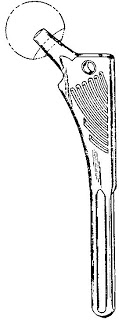
In Webb, a hip implant was refused as being (obviously) not visible in use, but it was visible at point of sale. The Court allowed the design, holding that it is not excluded if it "is a 'matter of concern' because of the nature of its visibility at some point between its manufacture or assembly and its ultimate use." That seems to avoid the problem admirably.
Having been brought up on these UK decisions, I would be interested to know whether the Polish court have a better reason for refusing under the same circumstances - or is this just symptomatic of a lack of love for IP, ice cream, or both? does anyone know the answer? What do other readers think?
Posted by: David Musker @ 14.30
Tags: ice cream, not visible, Poland, validity,
Perm-A-Link: https://www.marques.org/blogs/class99?XID=BHA289
What's the point of designs - point of sale or point of use?
According to the excellent case comment by Krystian Maciaszek, ("Poland: Are the Designs Within an Ice-Cream to be Registered as an Industrial Design?" Maciaszek, Krystian, European Intellectual Property Review (2010), volume 32 , issue 12 , p. 656-659, Table of Contents and abstract here, complete text available PPV on Westlaw), the Polish Supreme Court have revisited a sticky problem familiar to US and UK practitioners: what to do about a design which is only visible part of the time? The case, Przedsiebiorstwo Produkcji Lodow "Koral" JK General Partnership v Patent Office (unrep. March 20, 2007), concerned the internal layers of ice cream, which were in contrasting colours that only became visible when the ice cream was being eaten. I don't have a picture of the ice cream, alas.
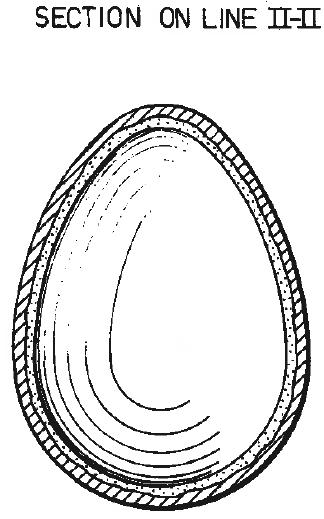
The UK Tribunal noted that it had long been the practice to allow registration for designs of internal features. An example was that of a jack-in-the-box - the toy is normally concealed inside a very boring cubic box which would lack novelty.
The particular problem seen in Ferrero's case was that the exterior of the egg was conventional and the new part of the design (the contrasting interior colours) could only be seen after its destruction by breaking the article to which it was applied open to eat it. This seems also to have been the issue taken by the Polish Office. However, the UK Tribunal found no difficulty in allowing the design, on the basis that the internal features formed one of the attractions of buying the egg (presumably, for repeat customers).
The Ferrero decision led to the allowance in K K Suwa Suwosha's Design Application [1982] RPC 166 of a digital watch with hard-wired icons that were not visible until the watch was powered up and, ultimately, to the practice on icons set out in the Apple case [2002] FSR 38.
The current EU law (unlike the older UK law) specifies a test person in the ambiguous shape of the "informed user". One might well therefore suppose that use, rather than sale, is the point at which a design is to be judged. As against this, it is normally the sale by the infringer which constitutes the damage to the proprietor, so the point of sale might be relevant - indeed, unauthorised sale is a statutory infringing "use" of the design, so the "user" at this point might be said to be the buyer rather than the end user.
By way of contrast, a US case going to the reverse point was In Re Webb, 916 F 2d 1553, 1557; 16 USPQ2d 1433, 1435 (Fed Cir 1990).
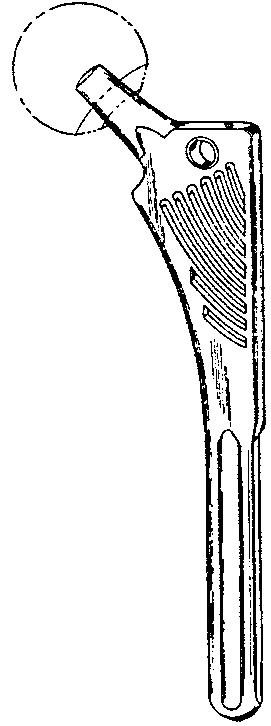
In Webb, a hip implant was refused as being (obviously) not visible in use, but it was visible at point of sale. The Court allowed the design, holding that it is not excluded if it "is a 'matter of concern' because of the nature of its visibility at some point between its manufacture or assembly and its ultimate use." That seems to avoid the problem admirably.
Having been brought up on these UK decisions, I would be interested to know whether the Polish court have a better reason for refusing under the same circumstances - or is this just symptomatic of a lack of love for IP, ice cream, or both? does anyone know the answer? What do other readers think?
Posted by: David Musker @ 14.30
Tags: ice cream, not visible, Poland, validity,
Perm-A-Link: https://www.marques.org/blogs/class99?XID=BHA289
MARQUES does not guarantee the accuracy of the information in this blog. The views are those of the individual contributors and do not necessarily reflect those of MARQUES. Seek professional advice before action on any information included here.
The Class 99 Archive

